
Missing Plastics Mystery Solved: Fertilizer Coatings Turn Beaches into Plastic Sinks
On a windy Japanese shoreline, researchers kneel in damp sand as canal-fed fields shuttle fertilizer-coated microplastics back onto the beach.
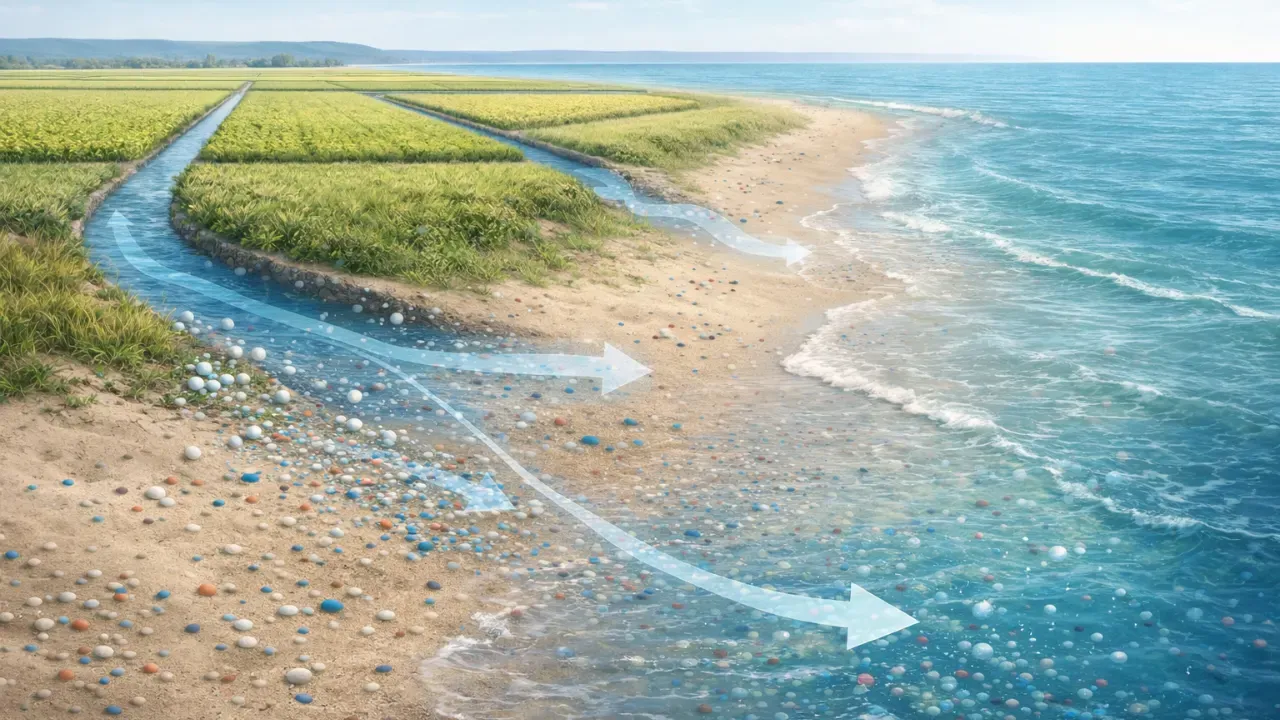
In canal-connected farmland, the study finds that polymer-coated fertilizer microplastics can return to shore, with up to 28% washing back onto beaches—vastly higher than the 0.2% observed near river mouths. This canal network acts as a secondary highway for plastics, recirculating them back to the coast rather than letting them disappear into open water.
The finding ties into ongoing coverage of the missing plastics puzzle and is summarized in science-news outlets such as ScienceDaily, which distills the field-to-beach pathway, and in the peer-reviewed work indexed by PubMed.
From Lab to Policy: Why It Matters
Professor Kawahigashi and Dr. Munkhbat’s results reveal a concrete mechanism that explains why some plastics seem to vanish after entering coastal waters: they are shuttled back to beaches via canal drainage. This shifts the policy conversation from rivers alone to integrated watershed design, urging a reevaluation of polymer-coated fertilizers and water-management strategies to reduce inland-to-coast plastic flux and protect beach ecosystems.
In the broader context of the public trend named Missing plastics, the study provides a usable model for other canal-connected farming regions around the world and a data-backed case for cross-sector action.
The Payoff: Designing a Safer Coastal System
With the mechanism now visible, farmers, engineers, and policymakers can align on practical interventions—from safer fertilizer formulations to redesigned drainage to intercept plastic before it re-lands on shore.
The era of relying on rivers as the sole conveyor belt for land-sourced plastics is ending, as new pathways illuminate how to safeguard coastlines and ocean health for future generations. The era of the missing plastics mystery is ending—and the next chapter is a coordinated, policy-driven safeguard of coastal futures.
Key Takeaways
- Canal-connected farmland creates a secondary route that can return fertilizer-derived microplastics to beaches.
- Return rates rise to up to 28% near canals, versus less than 0.2% near river mouths.
- Policy action: rethink polymer-coated fertilizers and water-management practices to reduce inland-to-coast plastic flux.
A new ocean study uncovers an unexpected carbon source in the deep sea, challenging long-held ideas about how life survives far below the surface.
Read the Full StoryFrom obsession to clarity — one original question every week.
We answer one noisy topic at a time, in full. No daily roundup, no thread bait — just the question, the principles, and the system.